
What Is Environmental Graphic Design?
When most people hear the phrase "environmental graphic design," the first thing that comes to mind is some kind of eco-friendly, save-the-planet initiative. Solar panels, wind turbines, a whole lot of recycled paper.
Honestly, who could blame them? The word environment usually makes us think of green technology and melting ice caps.
But here's the thing: environmental graphic design — EGD — has nothing to do with turning off your lights to save energy. (Though, real talk: you should still do that.)
So what exactly is it? Let's break it down properly.
What Is Environmental Graphic Design (EGD)?
Environmental graphic design (EGD) — also called experiential design, immersive design, or placemaking, is the practice of shaping how people experience and navigate physical spaces. It blends graphic design, architecture, interior design, and branding to create environments where people can find their way, understand a space's identity, and — ideally — feel something while doing it.
Think of it as the discipline that sits at the intersection of where you are and how that place makes you feel.
A hospital that immediately feels calm and organized. A stadium that puts 70,000 fans in a full-sensory brand experience before the game even starts. A corporate headquarters that communicates a company's values before an employee says a single word. That's EGD at work.
The 4 Core Disciplines of Environmental Graphic Design
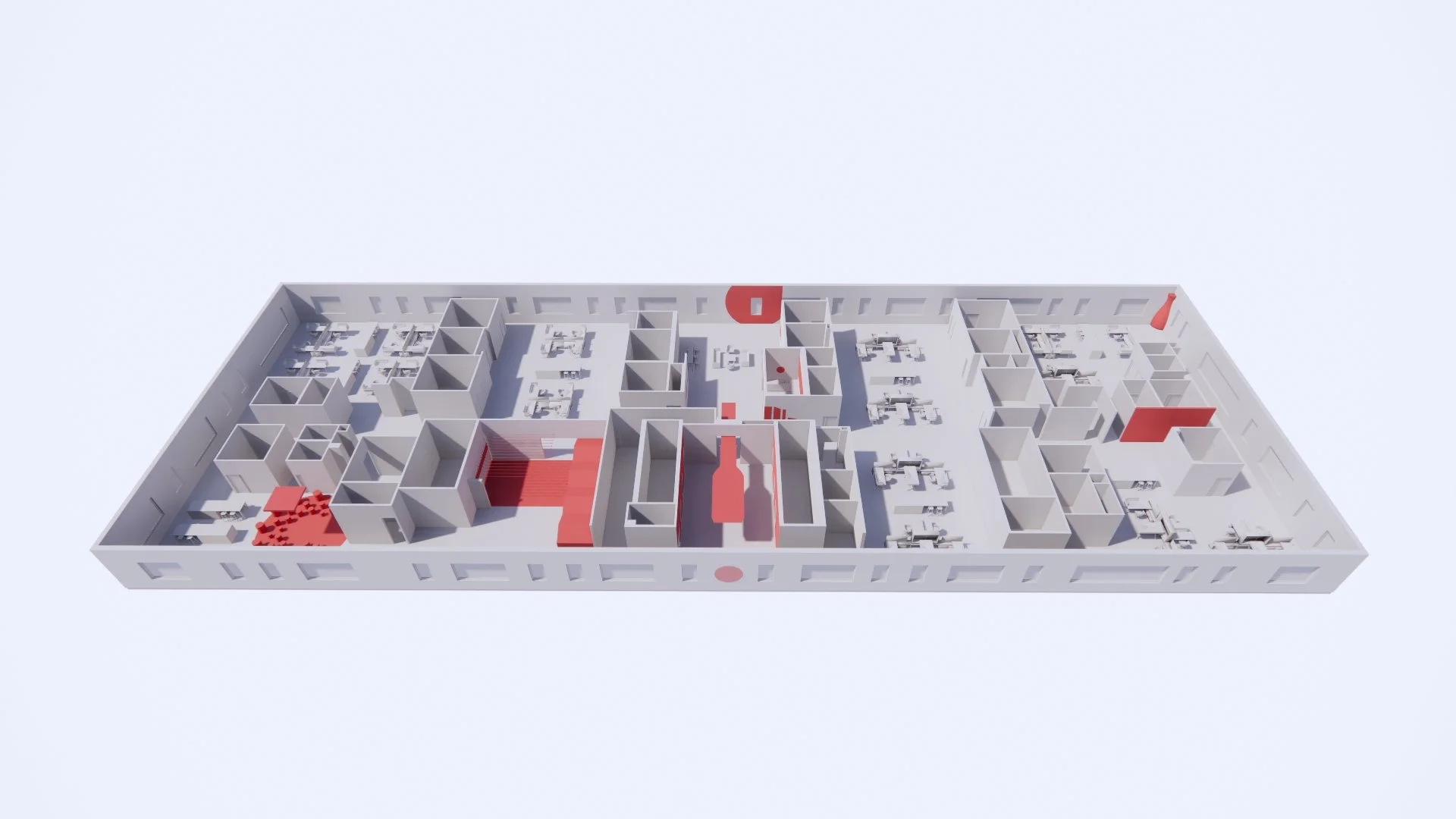
EGD draws from four overlapping areas. Understanding how they work together is what separates a good EGD studio from a great one.
1. Wayfinding & Signage
Wayfinding is the science of helping people move through spaces without getting lost — and without having to think too hard about it. That means signage that's consistent in style, legible from a distance, and placed strategically at decision points: forks in a corridor, building entrances, elevator banks, parking exits.
Good wayfinding is invisible when it works. You just... know where to go. When it fails, you feel it immediately — the low-grade stress of wandering a hospital floor looking for radiology, or circling a stadium concourse unable to find your section.
Our wayfinding system at SoFi Stadium and YouTube Theater at Hollywood Park was designed to move tens of thousands of people through complex, multi-level venues smoothly — before, during, and after events. Clear hierarchy, consistent visual language, and placement that anticipates how people actually move, not how an architect assumed they would.
Modern wayfinding increasingly layers in digital: interactive kiosks, mobile-integrated maps, and real-time dynamic signage that updates based on crowd flow or time of day. We design for both — because the best systems work whether or not someone has their phone out.
2. Branded Environments
A branded environment goes beyond putting a logo on a wall. It's about making a space feel unmistakably like the brand that occupies it — so that anyone who walks in has an immediate, visceral sense of what that organization stands for.
Large-format wall graphics, custom murals, material choices, architectural elements, typography, color systems — all of it working together to create a space that couldn't belong to anyone else.
When we designed the branded environment for Southwest Airlines' Dallas headquarters, the goal wasn't decoration. It was to make every employee feel the culture of the company the moment they walked through the door. The result was an environment that reflected Southwest's warmth, approachability, and Texan identity — not through a poster on the wall, but through every surface, every corridor, every common area.
3. Experiential Installations
This is where EGD gets genuinely exciting. Experiential installations invite interaction — they're designed to be touched, explored, responded to. Interactive displays, projection mapping, sensor-driven walls, immersive lighting systems that respond to presence or movement.
Unlike static graphics, experiential elements change with the people in the space. Every visit can be different. They're the features people photograph, share, and talk about long after they've left.
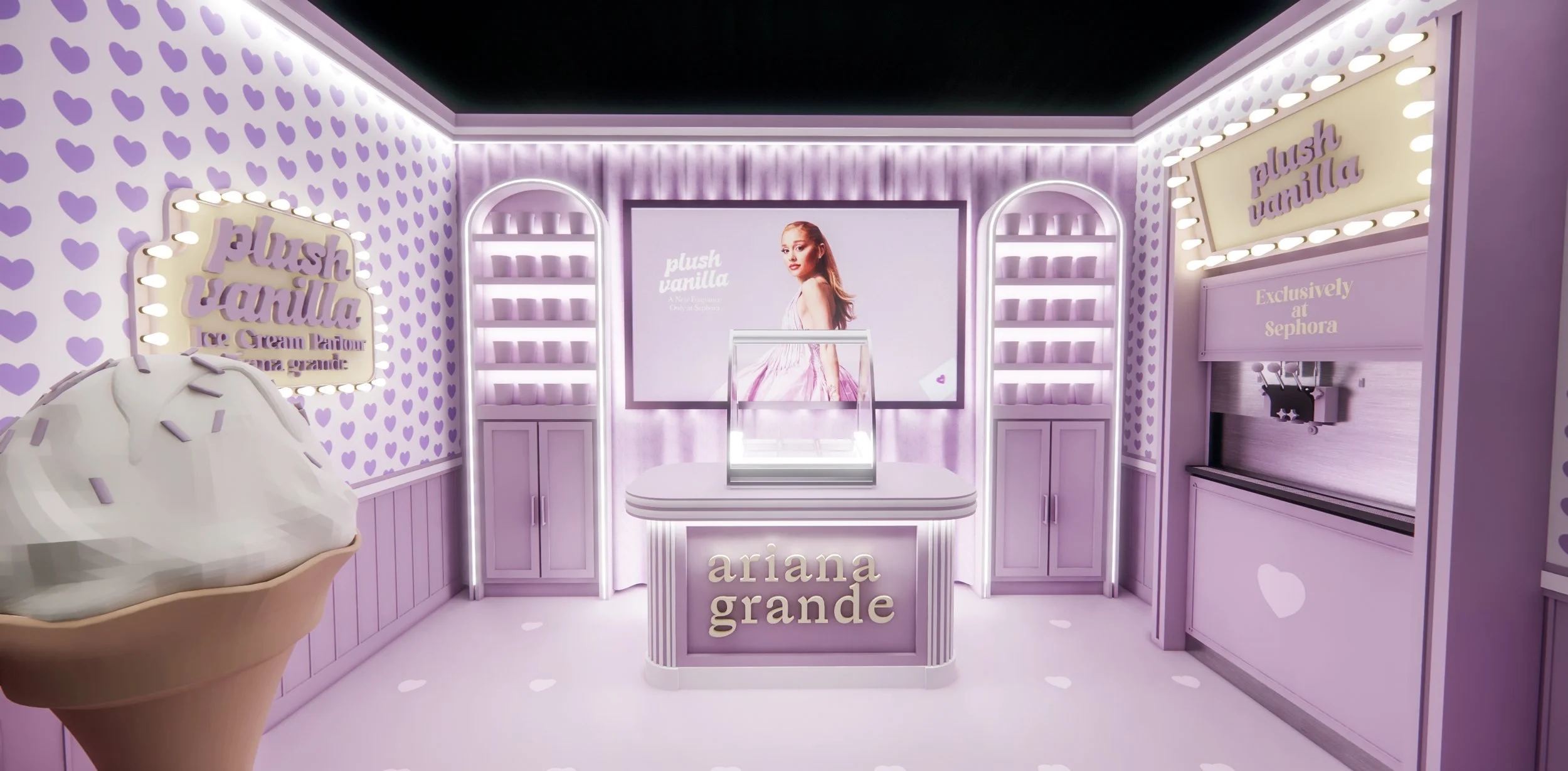
Our brand activation for Sephora's Ariana Grande Plush Vanilla launch was built around exactly this principle — a retail environment so immersive that people stopped shopping and started experiencing. That's not an accident. It's design.
4. Architectural Graphics
Architectural graphics are the deepest layer of EGD — design that's integrated directly into the structure of a space rather than applied on top of it. Etched glass panels. Branded structural columns. Facades with embedded motifs. Staircases that double as storytelling devices.
This approach creates harmony between the built environment and the graphic language, resulting in spaces that feel genuinely intentional — not like a building with graphics added later. It also tends to be the most durable: these elements are designed to endure for years, not be replaced with the next rebrand.
Where Environmental Graphic Design Shows Up (Hint: Everywhere You've Been)
EGD isn't niche. If you've been in a well-designed space of any kind, you've experienced it — you just didn't know what to call it.
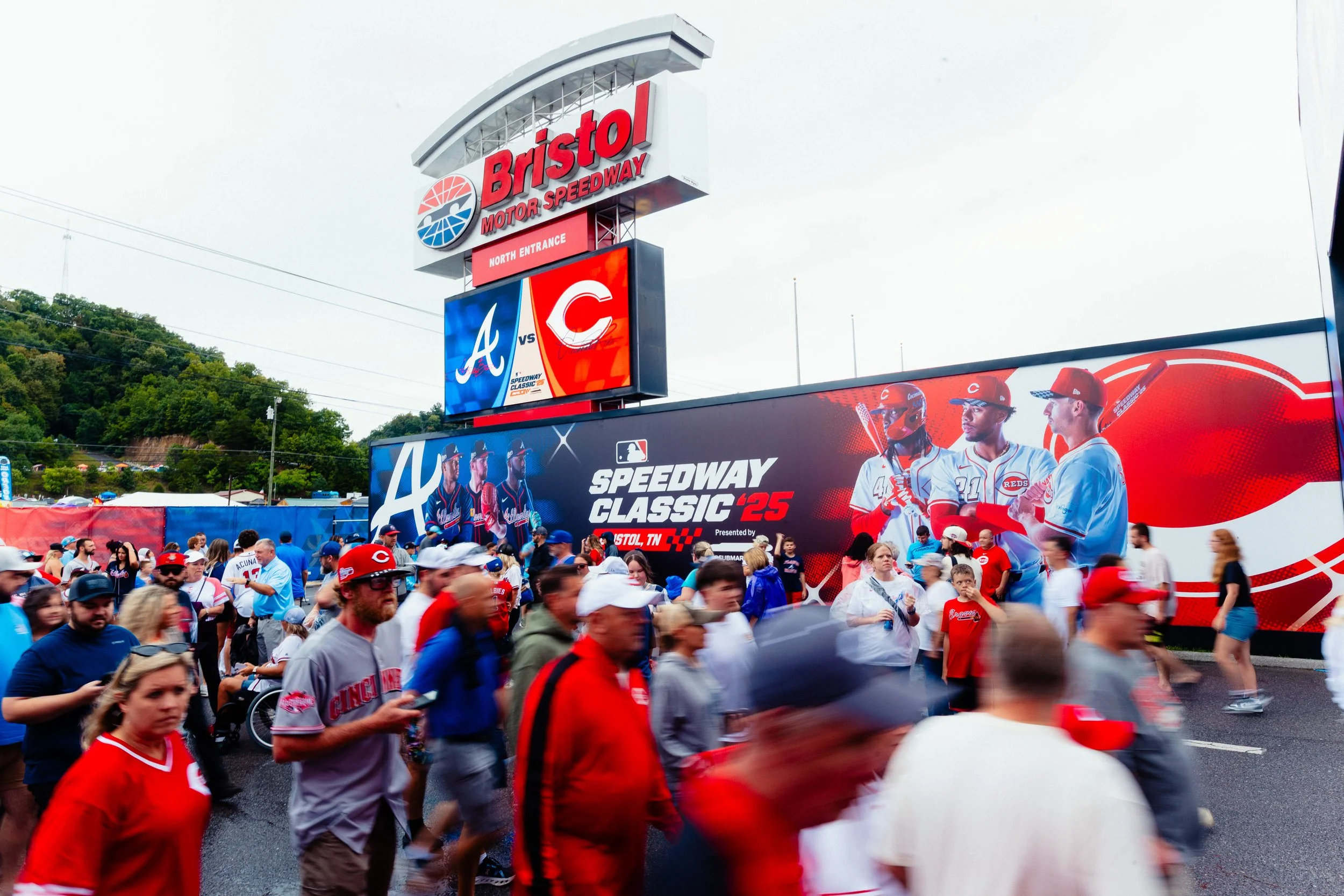
Sports venues and stadiums. From the moment a fan enters the parking structure to the moment they leave, every touchpoint is an EGD opportunity. Signage systems, brand activation moments, interactive fan experiences, wayfinding that moves tens of thousands of people without chaos. The MLB Speedway Classic Legacy Walk — a large-format storytelling environment at Bristol Motor Speedway — is a prime example of EGD operating at that scale.
Corporate headquarters. The physical workspace communicates company culture before a single conversation happens. Every Fortune 500 company with a "flagship" office has an EGD team behind it, whether they know that term or not.
Retail environments. The difference between a store you walk through and a store you remember is almost always EGD. Material choices, lighting, wayfinding, brand storytelling — it all adds up to an experience that either builds loyalty or doesn't.
Healthcare facilities. Clear wayfinding in hospitals directly reduces patient anxiety, decreases time-to-care, and improves satisfaction scores. This isn't soft benefit — it's measurable.
National parks and public spaces. Cape Hatteras National Seashore has a wayfinding and interpretive signage system that needed to work for first-time visitors from across the world, often in challenging weather conditions. That's EGD solving a real human problem.
Cultural institutions. Museums, libraries, zoos, aquariums — anywhere people come to learn and experience. The difference between a confusing exhibit and a memorable one is usually EGD.
Why EGD Matters More Than Ever
Spaces are competing for attention in a world where every experience is being shared on a phone. A well-designed environment is no longer just a nice-to-have — it's a competitive advantage.
People respond physically and emotionally to the spaces they inhabit. The right colors, materials, typography, and spatial logic can make a space feel sophisticated, energizing, calm, or inspiring. The wrong ones make a space feel generic, confusing, or forgettable.
For brands, EGD is also increasingly tied to how they perform. Retail stores with strong environmental design see higher dwell times and conversion rates. Corporate offices with strong branded environments see better talent retention and employee satisfaction. Venues with clear wayfinding see better reviews and return visits.
The future is accelerating this: augmented reality wayfinding, dynamic digital environments that respond in real time, sustainability-forward materials that don't compromise on visual impact. The studios building this future aren't just graphic designers — they're architects, industrial designers, interior designers, and storytellers working as one team.
That's the team we've built at Syfer.
Syfer's Approach: Concept to Fabrication
Most design studios will hand you a beautiful render and consider their job done. We don't.
Syfer Design is a full-service EGD studio with offices in Dallas, TX and Denver, CO. Our team spans architecture, graphic design, interior design, and industrial design — which means we express ideas in every dimension (2D, 3D, virtual reality, immersive video flythroughs) and see them through from the first sketch to fabrication-ready files.
Our clients include MLB, Nike, SoFi Stadium, Southwest Airlines, Sephora, Google, YouTube Theater, Hollywood Park, Expedia, and Cape Hatteras National Seashore.
We specialize in:
Wayfinding & signage systems — from single-building programs to multi-venue networks
Branded environments — corporate HQ, retail, hospitality, and cultural institutions
Brand activations — pop-ups, launch events, and immersive retail experiences
Experiential installations — interactive displays, large-format storytelling, and event environments
Ready to Build Something?
If you're working on a space that needs to do more than look good — if it needs to guide people, communicate a brand, and make visitors feel something — we'd love to hear about it.
